P A D
Western Thunderer
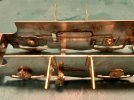
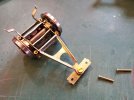
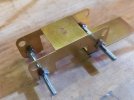
A little bit of discipline has crept in now and I'm concentrating on the chassis, although as usual I'll be flitting about rather than following the sequence in the instructions. For adding the wrappers to the cylinder etch I clamp the lower end to the required spacing with an M4 hex bolt and nuts, to avoid flexing. Once the bottom edge of the wrapper is soldered in place I remove the clamp. The kit provides two cylinder frame etchings, one to the correct width and a slightly wider one to give more clearance. The latter will have a detrimental effect on the appearance (mentioned in the instructions) so I've used the correct width version.
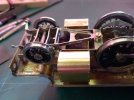
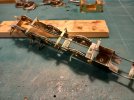
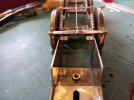
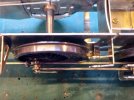
And test fit in the cleaned up chassis.

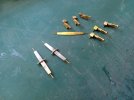
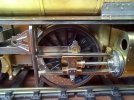
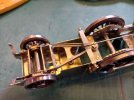
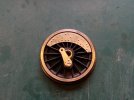
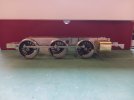
The crankpin holes in the wheels and the Slaters bushes were drilled and tapped to accept 10 BA bolts. The front one is screwed onto the bolt in reverse, with the flange on the outside and a brass washer on the inside of the coupling rod, to provide more clearance behind the slidebars and crossheads. The flanges have had two holes drilled to allow tightening with a pair of tweezers. The middle and rear bushes are screwed on flange first as normal, with the the rear finished with a steel 12BA washer and nut drilled/tapped to 10 BA. The chassis was free running from the start so any binding later on will be due to the valve gear. The large middle balance weights correctly cover 8 spokes, but the smaller front and rear weights were too large also covering 8 spokes. These had to be cut down to cover 6 spokes before fitting. The positions were determined from prototype images and marked on the rim with a felt pen before fitting.
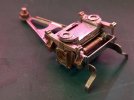
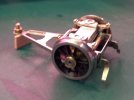
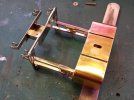
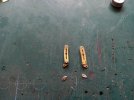
Next the motion and lifting link brackets. After adding the trunnions the two brackets are linked together with a couple of spacers. The latter are too deep and if fitted as supplied will extend below the bottom edges of the brackets and prevent the unit from sitting down in the frame slots. Many thanks to Roger Scanlon for giving me the heads up on that.

Much easier to correct in the flat than after they are in place. The tabs at each end for locating the brackets are also much too long and I cut and filed them down before fitting.
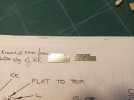
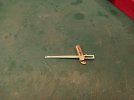
After folding up the outer trunnions for the lifting links, the inner ones were lined up and held with a suitable lenght of rod before soldering.
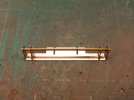
The ones on the motion bracket were done the same, although the outer ones are separate and have to be soldered "free hand" before using the rod for the inner ones. Then the spacers were added.
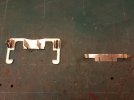
Followed by the lifting links bracket.
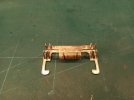

And dropped into the frames.
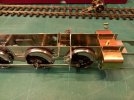
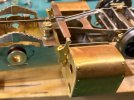
You can see here that the bracket spacers as supplied would have fouled the middle frame spacer leaving the brackets sat too high.
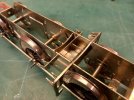
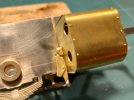
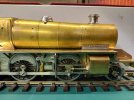
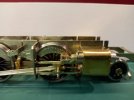
With the body on, the hanging plates are pressing on the top of the motion bracket pushing it out of alignment so that will need some attention.
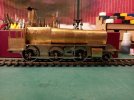
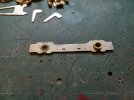
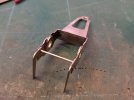
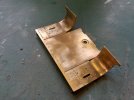
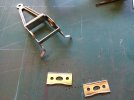
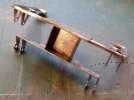
I also made a start on the pony truck which is a very simple representation of the real thing. Here's the instruction diagram showing the components. Although I made a start based on the instructions, it will need quite a bit of revamping to get it nearer to the real thing. The cast springs 151 and etch springs P4 are wrong for the Stanier Mogul truck. I believe they are correct for the Fowler 2-6-4T and the designer, David Andrews I believe, may have carried them over from his big Fowler tank.

This is the real thing minus the leaf springs above the horn guides.
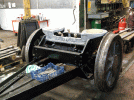
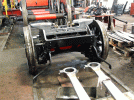
And the kit components. I knew when I got the kit that the springs were wrong so I purchased a pair of 8F castings (made by Sanspareil) from MOK. As the castings need to go on the outside of the truck, I fitted the bearings on the inside.

I'm up to the maximum images so I'll continue on the next post.
Cheers,
Peter
And test fit in the cleaned up chassis.
The crankpin holes in the wheels and the Slaters bushes were drilled and tapped to accept 10 BA bolts. The front one is screwed onto the bolt in reverse, with the flange on the outside and a brass washer on the inside of the coupling rod, to provide more clearance behind the slidebars and crossheads. The flanges have had two holes drilled to allow tightening with a pair of tweezers. The middle and rear bushes are screwed on flange first as normal, with the the rear finished with a steel 12BA washer and nut drilled/tapped to 10 BA. The chassis was free running from the start so any binding later on will be due to the valve gear. The large middle balance weights correctly cover 8 spokes, but the smaller front and rear weights were too large also covering 8 spokes. These had to be cut down to cover 6 spokes before fitting. The positions were determined from prototype images and marked on the rim with a felt pen before fitting.
Next the motion and lifting link brackets. After adding the trunnions the two brackets are linked together with a couple of spacers. The latter are too deep and if fitted as supplied will extend below the bottom edges of the brackets and prevent the unit from sitting down in the frame slots. Many thanks to Roger Scanlon for giving me the heads up on that.
Much easier to correct in the flat than after they are in place. The tabs at each end for locating the brackets are also much too long and I cut and filed them down before fitting.
After folding up the outer trunnions for the lifting links, the inner ones were lined up and held with a suitable lenght of rod before soldering.
The ones on the motion bracket were done the same, although the outer ones are separate and have to be soldered "free hand" before using the rod for the inner ones. Then the spacers were added.
Followed by the lifting links bracket.
And dropped into the frames.
You can see here that the bracket spacers as supplied would have fouled the middle frame spacer leaving the brackets sat too high.
With the body on, the hanging plates are pressing on the top of the motion bracket pushing it out of alignment so that will need some attention.
I also made a start on the pony truck which is a very simple representation of the real thing. Here's the instruction diagram showing the components. Although I made a start based on the instructions, it will need quite a bit of revamping to get it nearer to the real thing. The cast springs 151 and etch springs P4 are wrong for the Stanier Mogul truck. I believe they are correct for the Fowler 2-6-4T and the designer, David Andrews I believe, may have carried them over from his big Fowler tank.
This is the real thing minus the leaf springs above the horn guides.
And the kit components. I knew when I got the kit that the springs were wrong so I purchased a pair of 8F castings (made by Sanspareil) from MOK. As the castings need to go on the outside of the truck, I fitted the bearings on the inside.
I'm up to the maximum images so I'll continue on the next post.
Cheers,
Peter