
You are using an out of date browser. It may not display this or other websites correctly.
You should upgrade or use an alternative browser.
You should upgrade or use an alternative browser.


Mr Grumpy
Western Thunderer
I spoke too soon!
I have soldered the rear stretcher up side down. I couldn't tell the difference until it was too late.
As I said above , I couldn't see a happy ending in trying to remove it. After 15 mins faffing with the gas torch, I gave up and filed the top of the stretcher so the axle box assy sits properly. It won't be seen, but I am really annoyed with myself, as I know it is there!
I'm also wondering if it will effect the brake linkages as the brake cylinder is now also approx 1mm too high, so the linkages that are part of the casting will be slightly turned back to reach the brake cylinder....if that makes sence!
I have soldered the rear stretcher up side down. I couldn't tell the difference until it was too late.
As I said above , I couldn't see a happy ending in trying to remove it. After 15 mins faffing with the gas torch, I gave up and filed the top of the stretcher so the axle box assy sits properly. It won't be seen, but I am really annoyed with myself, as I know it is there!
I'm also wondering if it will effect the brake linkages as the brake cylinder is now also approx 1mm too high, so the linkages that are part of the casting will be slightly turned back to reach the brake cylinder....if that makes sence!
Mr Grumpy
Western Thunderer
I have decided to make the brake linkage/ shoes removable for painting and maintenance. So there isn't a huge amount left for the chassis until I source some correctly sized nuts and bolts. I will get the middle steps, sand boxes and a couple of detail overlays fitted and pop some photos in. 
Mr Grumpy
Western Thunderer
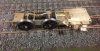
Taking a day off today, but I got the 14ba nuts and bolts and the wheels and pick ups arrived. I don't yet have taps and dies so my only option is to solder the nut to the rear of the brake hanger brackets (circled) and the ones on the centre steps when fitted.
I have also added a photo of the rear stretcher.
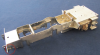

I have also added a photo of the rear stretcher.


West Junction
Western Thunderer
I have now put the valances under the body (only fixed by twisting tabs) and put the tank overlay in place (not fixed at all).
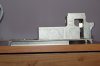
You can just see the tabs of the overlay under the footplate. These are tight up against the valance and if the valance is left in place will it be difficult to remove them? Presumably as they cannot be twisted it would be wise to bend them outwards to hold the overlay in place whilst soldering and hopefully they will simply break off with bending.
This second valance bent easily with my hold and fold. The valance was held in the hold and fold with the top and support outside. With the first valance it was held the opposite way round with the valance bent up outside the hold and fold, much more difficult with the buffer beam drop ends bending before the main valance length.
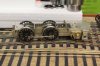
Here is a picture of my chassis. I reduced the thickness of the wheels and turned them down to S7. With the coupling rods on you hardly have to lift one end of the boards for it to just run away thanks to MOK's precision. Because of the reduction in the flanges the opening for the pickups (behind rear wheel) may have to be moved slightly. How do others cope with this.
Pete
You can just see the tabs of the overlay under the footplate. These are tight up against the valance and if the valance is left in place will it be difficult to remove them? Presumably as they cannot be twisted it would be wise to bend them outwards to hold the overlay in place whilst soldering and hopefully they will simply break off with bending.
This second valance bent easily with my hold and fold. The valance was held in the hold and fold with the top and support outside. With the first valance it was held the opposite way round with the valance bent up outside the hold and fold, much more difficult with the buffer beam drop ends bending before the main valance length.
Here is a picture of my chassis. I reduced the thickness of the wheels and turned them down to S7. With the coupling rods on you hardly have to lift one end of the boards for it to just run away thanks to MOK's precision. Because of the reduction in the flanges the opening for the pickups (behind rear wheel) may have to be moved slightly. How do others cope with this.
Pete

adrian
Flying Squad
That does look rather good - I have no reason at all to have a 14xx wrong region etc but keep going like this and it will end up on my shopping list. Although the 4mm Airfix 14xx was the very first loco I bought with my own money many many years ago so that must be a good a reason as any!!
Mr Grumpy
Western Thunderer
Not much progress to report. I deliberated over making the horn block keeper plates removable. In the end I soldered them in as once the chassis springs are fitted, I couldn't see a way of removing them.
However, I have soldered 14ba nuts to the rear of the brake shoe hangers and inserted a screw so that the brake linkage and shoes can be removed along with the wheels for painting.
I have also got the slide bars in (Thanks Mark!) and the centre steps fitted. I found I had two identical front sand boxes sent by mistake, so will get those fitted soon. I'm hoping to have the con rods made up along with the life guards tomorrow.


However, I have soldered 14ba nuts to the rear of the brake shoe hangers and inserted a screw so that the brake linkage and shoes can be removed along with the wheels for painting.
I have also got the slide bars in (Thanks Mark!) and the centre steps fitted. I found I had two identical front sand boxes sent by mistake, so will get those fitted soon. I'm hoping to have the con rods made up along with the life guards tomorrow.
Mr Grumpy
Western Thunderer
I still don't have a great deal of progress to report, as I have had a bit of a self inflicted war with the coupling rods.
Problems began when a countersunk slot screw refused to budge from holding a wheel in place. Unfortunately, the allen key slot rounded and I resorted to drilling the offending screw out.
Slaters did replace the axle and screws for me a couple of days later.
The crankpin screws were 'cheese head' and fouled the chassis, so I drilled in to the rear of the wheel and sunk them in. Possibly during this exercise, I may have inadvertently caused the screws to not sit exactly at right angles to the wheel faces
Anyhow, this took a lot of faffing, decrying kit building forever, threatening to go RTR 00 etc. etc. Poor Mark JJ got the brunt of this, and Mr Dog Star also advised. During a conversation with David Sharp, he advised to open the con rods a tiny amount, and every thing put together has worked! The chassis is incredibly free running now, so I can cheer up and should have the brake gear, etc on soon.
Lucky I started on something simple!!


Problems began when a countersunk slot screw refused to budge from holding a wheel in place. Unfortunately, the allen key slot rounded and I resorted to drilling the offending screw out.
Slaters did replace the axle and screws for me a couple of days later.
The crankpin screws were 'cheese head' and fouled the chassis, so I drilled in to the rear of the wheel and sunk them in. Possibly during this exercise, I may have inadvertently caused the screws to not sit exactly at right angles to the wheel faces
Anyhow, this took a lot of faffing, decrying kit building forever, threatening to go RTR 00 etc. etc. Poor Mark JJ got the brunt of this, and Mr Dog Star also advised. During a conversation with David Sharp, he advised to open the con rods a tiny amount, and every thing put together has worked! The chassis is incredibly free running now, so I can cheer up and should have the brake gear, etc on soon.
Lucky I started on something simple!!

Dog Star
Western Thunderer
You could have popped over and I would have given you some replacement axles... S7 to give you practice for the Spaceship.Slaters did replace the axle and screws for me
Mr Grumpy
Western Thunderer
Thanks Graham,You could have popped over and I would have given you some replacement axles... S7 to give you practice for the Spaceship.
Just what I need... I'm struggling with a simple chassis in fine scale!
I can feel a padded cell looming!


richard carr
Western Thunderer
Richard
You do need to be very careful with steam locomotive driving wheels, the bigger they get the easier it is to mess things up. Diesel wheels are so much easier to deal with and it doesn't matter a bit if there is some slop in the bearings as there are no coupling rods !
I'm not trying to make you go back to diesels but in my opinion its much more difficult to build a good steam chassis, not that it can't be done you just need to be a bit more precise.
Wait till you do the 9f .
Richard
You do need to be very careful with steam locomotive driving wheels, the bigger they get the easier it is to mess things up. Diesel wheels are so much easier to deal with and it doesn't matter a bit if there is some slop in the bearings as there are no coupling rods !
I'm not trying to make you go back to diesels but in my opinion its much more difficult to build a good steam chassis, not that it can't be done you just need to be a bit more precise.
Wait till you do the 9f .
Richard
Mr Grumpy
Western Thunderer
Hi Richard,Richard
You do need to be very careful with steam locomotive driving wheels, the bigger they get the easier it is to mess things up. Diesel wheels are so much easier to deal with and it doesn't matter a bit if there is some slop in the bearings as there are no coupling rods !
I'm not trying to make you go back to diesels but in my opinion its much more difficult to build a good steam chassis, not that it can't be done you just need to be a bit more precise.
Wait till you do the 9f .
Richard
I will still be modelling diesels! Just smaller ones that can go round corners on my next layout
I'm treating this build as an apprenticeship as I have never built an 0 gauge steam loco before. I would clearly be out of my depth attempting a complex build at present.
If I had the 9f (which DEFINATELY won't go round the corners of my layout, but I have other plans for its use) any time soon, the plan is to build at least a further couple of locomotives and build up my experience and workshop tools.
I'm sorting a pillar drill, more broaches and BA taps and dies. Also thinking of rollers...
I was always too easily seduced in to buying more RTR locomotives, which just ended up on display instead of investing in building my workshop equipment.
My weak spot has always been assembling chassis, even on wagons it takes me ages, hence why I asked Steph to make the excellent chassis on my DJH 47.
I'm determined to build a quality chassis for both diesel, steam and wagons! I have received lots of helpful advice along the way and hopefully, even at my age it will click in to place!

Mr Grumpy
Western Thunderer
Mr Dogstar sat down and took a good look over my 14xx chassis yesterday.
The good news was that the chassis and axles appear square. He noticed one of the wheels was very slightly not square with the chassis and said it may be a burr on the axle.
Strangely, with all crank pin nuts tight the chassis ran smoothly without actually doing anything!
Also, I hadn't tightened the wheels fully for fear of the screws seizing again. However, they all have a smear of graphite grease (including the thread inside the axles) so hopefully won't sieze again. I have given the axle ends a careful sweep with emery cloth, popped the wheels back on and all is sweet as can be!
To be honest, the burr was only visable to me with a magnifying glass.
Still, lesson learned, check and check again!
All the sandboxes and rear sandbox pipes are fitted along with the guard irons. I'm just making some straps for the sand pipes but they are very fragile.
Edit: I forgot to say thank you Dog Star!
The good news was that the chassis and axles appear square. He noticed one of the wheels was very slightly not square with the chassis and said it may be a burr on the axle.
Strangely, with all crank pin nuts tight the chassis ran smoothly without actually doing anything!
Also, I hadn't tightened the wheels fully for fear of the screws seizing again. However, they all have a smear of graphite grease (including the thread inside the axles) so hopefully won't sieze again. I have given the axle ends a careful sweep with emery cloth, popped the wheels back on and all is sweet as can be!
To be honest, the burr was only visable to me with a magnifying glass.
Still, lesson learned, check and check again!
All the sandboxes and rear sandbox pipes are fitted along with the guard irons. I'm just making some straps for the sand pipes but they are very fragile.
Edit: I forgot to say thank you Dog Star!
Last edited:

AJC
Western Thunderer
Richard
You do need to be very careful with steam locomotive driving wheels, the bigger they get the easier it is to mess things up. Diesel wheels are so much easier to deal with and it doesn't matter a bit if there is some slop in the bearings as there are no coupling rods !
Richard
Hmm, steam locos lack (generally) flycranks and jackshafts, but small (and dare I say, more interesting?!) diesel prototypes have them in abundance. These can be - especially in 4mm without self-quartering wheels - the very devil to get running correctly. And as for slipping outside cranks... You folks with your Slaters wheels have it made!

This is a lovely looking kit though. Nice work.
Adam

Mr Grumpy
Western Thunderer
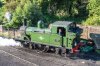
That's a lovely photo!
It is such a pretty little loco, I'm looking forward to seeing mine on a train of milk tankers!
Mr Grumpy
Western Thunderer
I received a package from MarkJJ today containing some exquisite GWR style crank pin nuts, paper gauge inserts and a CD packed with good quality detail photos, so all sanding pipes are now installed.
Thanks very much Mark.
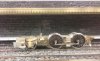
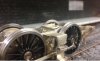
The brake shoes are not fixed or finally fettled yet (very little needed) but just screwed in to ensure my 14ba nuts where soldered correctly. The stretchers are also waiting to be fixed.
I will split the brake gear so that the two stretchers and brake shoes/hangers are in one unit, and the rod from the brake cylinder to the stretchers is detachable from the stretchers and cylinder so the rear wheel assembly can also be removed for painting and maintenance. I will join the rod with a 14ba nut and bolt at each end.
The markings on the wheels and rods are to ensure everything goes back to it's original place.
Thanks very much Mark.
The brake shoes are not fixed or finally fettled yet (very little needed) but just screwed in to ensure my 14ba nuts where soldered correctly. The stretchers are also waiting to be fixed.
I will split the brake gear so that the two stretchers and brake shoes/hangers are in one unit, and the rod from the brake cylinder to the stretchers is detachable from the stretchers and cylinder so the rear wheel assembly can also be removed for painting and maintenance. I will join the rod with a 14ba nut and bolt at each end.
The markings on the wheels and rods are to ensure everything goes back to it's original place.