
You are using an out of date browser. It may not display this or other websites correctly.
You should upgrade or use an alternative browser.
You should upgrade or use an alternative browser.
Watford Tank
- Thread starter Jim Smith
- Start date


Jim Smith
Member
Building a LNWR Webb Watford Tank in gauge 1
Jim Smith
I recently acquired a set of wheels which, when measured for 1/32 scale, worked out to be 5ft 3ins and 3ft 9ins so I did a bit of research and found them to be close to the sizes used for the LNWR Watford Tank 0 – 6 – 2. As this seemed a fairly easy prototype to model I decided to give it a try.
I next managed to obtain some drawings from the Gauge 0 Guild and scaled them from 7mm/ft to 9.525mm/ft using my photocopier set to print at 136%. As these were now too big for A4 paper , they were printed in sections and taped together. I also obtained some drawings from the book “Bashers, Gadgets and Mourners” by Peter Skelton. This is a book about the Coal Tank but the cab layout is similar. I also obtained a large scale drawing from The Historical Model Railway Society who have a huge archive of information.
When scratchbuilding, I always start with the coupling rods and use them as a guide to accurately drilling the frames.
I also recommend thoroughly washing the parts after each soldering operation using hot water and washing up liquid (the very cheap stuff without lanolin from the cut price shop is best)
Coupling Rods
It is possible to get coupling rods made by Model Engineers Laser as they can make whatever you want but I decided to fabricate my own using a small handheld electric drill and hand tools.
I looked at the drawings and decided that I could use some code 200 brass bullhead rail from Tenmille if I carefully filed down the top of the rail so that the flanges top and bottom were the same. The first section was the front rods one of which was drilled for 1mm holes on 7ft 3ins centres.
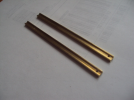
The two rods were then bolted together with a 14BA nut and bolt and the other end clamped together and the second hole was drilled in the second rod using the first as a guide. The holes were then opened out to 3mm,
A pair of 3mm solder tags was then clamped at right angles to the rod at the front end using a 3mm stainless bolt and nut so that the solder would not stick to it.

The solder tags were then soldered to the coupling rod end and the void between the tag ends filled with solder.

The rod end could then be filed to the proper profile.

Some solder tags were then drilled with an extra small hole 5mm from the centre of the 3mm hole. One was drilled then the other 3 were clamped with a 3mm bolt so that the first one could be used as a guide to drill the other 3.

The new hole was then opened out to 1.2mm for a 12BA screw for the pivot bolt.

A 12BA nut and bolt was then fitted and tightened and the end of the tag was sawn off and filed to a radius profile.
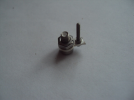
The tags could then be separated, knowing they would all be the same.
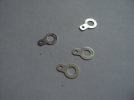
The cut down tags and some uncut tags were then bolted to the rear end of the rod and carefully lined up and tightened. This is quite tricky to get all of them lined up.
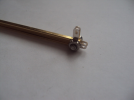
The tags were then soldered to the rod as shown before but being very careful not to get any solder in between the short tags in line with the rods.

The rod end was then filed to the correct profile as before.
The rear rods were then cut to length and the front ends were thinned and drilled 1.2mm so they would fit into the rear of the front rod.

One of the rear rods was then bolted to one of the front rods and marked out and drilled for the rear hole at 8ft 3ins from the centre of the rear font rod hole.
Both of the front rods were then bolted together with 3mm bolts and the rear rods were then pinned through the fixings with a 1.2mm drill so that the other end could be clamped in the vice and the rearmost hole drilled and opened out to 3mm dia.
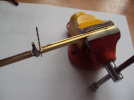
The rearmost end of the rear rod was then fitted with solder tags and soldered in the same way as the front end of the front rod.
After filing to shape, the rods were assembled with 12BA nuts and bolts, although final assembly was left until fitting to wheels in the chassis.

Once fully assembled, the rods were tinned with Carrs 70 C1001 low melting point solder and LA-CO regular soldering paste with my variable temperature soldering iron set to 110 degrees C so as not to melt the 155 degree solder used in their construction. They were then thoroughly washed in hot water.
Frames
Once the coupling rods were made, they were used to accurately make the frames. To cut out the frames, The drawing was photocopied onto a self adhesive single large label, cut to the correct size needed with a ruler and scalpel and stuck onto the 1mm brass sheet.
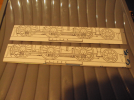
The wheel diameters were then carefully measured and compared to the drawing. Because the wheels I had were slightly over size, new positions for the wheel centres were marked on the drawing in order to make sure that the buffer height was correct.
The two pieces of brass were then clamped together with a piece of plywood underneath and the first axle centre hole was drilled with a 1.5mm pilot drill. This was then opened out to 3mm and one of the coupling rods was bolted to the brass.

The coupling rod was then bolted through the first hole,carefully lined up with the newly marked axle centre, clamped into place and carefully drilled through the coupling rod boss and a 3mm bolt fitted.
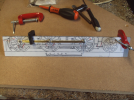
The last hole was drilled the same way and the third 3mm bolt was fitted. The position was then carefully double checked to make sure they were in line.
The second coupling rod should also fit the bolts. The holes for the frame spacers, trailing axle and brake hangers were then drilled. The coupling rods were then removed and the plywood backing was removed and the axle holes in the plywood sheet were opened out to take the 3mm axle bolt heads. The frames were then bolted together with the four 3mm axle bolts and the plywood sheet was then refitted using 3mm countersunk screws to the rear of the frames. This gives a flat rear surface so the frames can be cut out on a bandsaw.
The frames were then rough cut to size using my cheap LIDL bandsaw which is very easy and safe to use, you have to be very determined to cut off a finger!
The plywood backing was then removed and the frames held between some long aluminium angle jaws in the vice and filed to the final shape.
Jim Smith
I recently acquired a set of wheels which, when measured for 1/32 scale, worked out to be 5ft 3ins and 3ft 9ins so I did a bit of research and found them to be close to the sizes used for the LNWR Watford Tank 0 – 6 – 2. As this seemed a fairly easy prototype to model I decided to give it a try.
I next managed to obtain some drawings from the Gauge 0 Guild and scaled them from 7mm/ft to 9.525mm/ft using my photocopier set to print at 136%. As these were now too big for A4 paper , they were printed in sections and taped together. I also obtained some drawings from the book “Bashers, Gadgets and Mourners” by Peter Skelton. This is a book about the Coal Tank but the cab layout is similar. I also obtained a large scale drawing from The Historical Model Railway Society who have a huge archive of information.
When scratchbuilding, I always start with the coupling rods and use them as a guide to accurately drilling the frames.
I also recommend thoroughly washing the parts after each soldering operation using hot water and washing up liquid (the very cheap stuff without lanolin from the cut price shop is best)
Coupling Rods
It is possible to get coupling rods made by Model Engineers Laser as they can make whatever you want but I decided to fabricate my own using a small handheld electric drill and hand tools.
I looked at the drawings and decided that I could use some code 200 brass bullhead rail from Tenmille if I carefully filed down the top of the rail so that the flanges top and bottom were the same. The first section was the front rods one of which was drilled for 1mm holes on 7ft 3ins centres.
The two rods were then bolted together with a 14BA nut and bolt and the other end clamped together and the second hole was drilled in the second rod using the first as a guide. The holes were then opened out to 3mm,
A pair of 3mm solder tags was then clamped at right angles to the rod at the front end using a 3mm stainless bolt and nut so that the solder would not stick to it.
The solder tags were then soldered to the coupling rod end and the void between the tag ends filled with solder.
The rod end could then be filed to the proper profile.
Some solder tags were then drilled with an extra small hole 5mm from the centre of the 3mm hole. One was drilled then the other 3 were clamped with a 3mm bolt so that the first one could be used as a guide to drill the other 3.
The new hole was then opened out to 1.2mm for a 12BA screw for the pivot bolt.
A 12BA nut and bolt was then fitted and tightened and the end of the tag was sawn off and filed to a radius profile.
The tags could then be separated, knowing they would all be the same.
The cut down tags and some uncut tags were then bolted to the rear end of the rod and carefully lined up and tightened. This is quite tricky to get all of them lined up.
The tags were then soldered to the rod as shown before but being very careful not to get any solder in between the short tags in line with the rods.
The rod end was then filed to the correct profile as before.
The rear rods were then cut to length and the front ends were thinned and drilled 1.2mm so they would fit into the rear of the front rod.
One of the rear rods was then bolted to one of the front rods and marked out and drilled for the rear hole at 8ft 3ins from the centre of the rear font rod hole.
Both of the front rods were then bolted together with 3mm bolts and the rear rods were then pinned through the fixings with a 1.2mm drill so that the other end could be clamped in the vice and the rearmost hole drilled and opened out to 3mm dia.
The rearmost end of the rear rod was then fitted with solder tags and soldered in the same way as the front end of the front rod.
After filing to shape, the rods were assembled with 12BA nuts and bolts, although final assembly was left until fitting to wheels in the chassis.
Once fully assembled, the rods were tinned with Carrs 70 C1001 low melting point solder and LA-CO regular soldering paste with my variable temperature soldering iron set to 110 degrees C so as not to melt the 155 degree solder used in their construction. They were then thoroughly washed in hot water.
Frames
Once the coupling rods were made, they were used to accurately make the frames. To cut out the frames, The drawing was photocopied onto a self adhesive single large label, cut to the correct size needed with a ruler and scalpel and stuck onto the 1mm brass sheet.
The wheel diameters were then carefully measured and compared to the drawing. Because the wheels I had were slightly over size, new positions for the wheel centres were marked on the drawing in order to make sure that the buffer height was correct.
The two pieces of brass were then clamped together with a piece of plywood underneath and the first axle centre hole was drilled with a 1.5mm pilot drill. This was then opened out to 3mm and one of the coupling rods was bolted to the brass.
The coupling rod was then bolted through the first hole,carefully lined up with the newly marked axle centre, clamped into place and carefully drilled through the coupling rod boss and a 3mm bolt fitted.
The last hole was drilled the same way and the third 3mm bolt was fitted. The position was then carefully double checked to make sure they were in line.
The second coupling rod should also fit the bolts. The holes for the frame spacers, trailing axle and brake hangers were then drilled. The coupling rods were then removed and the plywood backing was removed and the axle holes in the plywood sheet were opened out to take the 3mm axle bolt heads. The frames were then bolted together with the four 3mm axle bolts and the plywood sheet was then refitted using 3mm countersunk screws to the rear of the frames. This gives a flat rear surface so the frames can be cut out on a bandsaw.
The frames were then rough cut to size using my cheap LIDL bandsaw which is very easy and safe to use, you have to be very determined to cut off a finger!
The plywood backing was then removed and the frames held between some long aluminium angle jaws in the vice and filed to the final shape.

john lewsey
Western Thunderer
Hi Jim , I am looking forward to this.
Jim Smith
Member
Hi John - struggling with the 16 file limit and trying not to get it too garbled! Doing it with the simpler radio controlled electric ones first before I move on to the live steamersHi Jim , I am looking forward to this.
Jim Smith
Member
The second coupling rod should also fit the bolts. The holes for the frame spacers, trailing axle and brake hangers were then drilled. The coupling rods were then removed and the plywood backing was removed and the axle holes in the plywood sheet were opened out to take the 3mm axle bolt heads. The frames were then bolted together with the four 3mm axle bolts and the plywood sheet was then refitted using 3mm countersunk screws to the rear of the frames. This gives a flat rear surface so the frames can be cut out on a bandsaw.
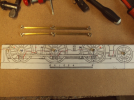
The frames were then rough cut to size using my cheap LIDL bandsaw which is very easy and safe to use, you have to be very determined to cut off a finger!


The plywood backing was then removed and the frames held between some long aluminium angle jaws in the vice and filed to the final shape.
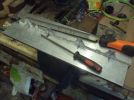
Once filed to shape, the frames were separated and the paper labels removed with label remover spray if necessary.
Because I used Slaters axle bushes, the axle holes were opened up, a half millimetre at a time, to 8mm and a taper reamer was then used to open them up until the bushes were a tight fit. The centre axle hole and the trailing axle hole were carefully filed a little to allow a little vertical movement.
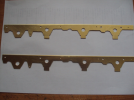
A trial assembly of the frames, some 35mm x 3mm threaded spacers, bushes, axles, wheels, coupling rods and coupling rod bushes was made to make sure everything fitted and ran smoothly. I did not Loctite the wheels at this stage.
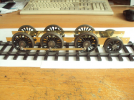
After dismantling the frames, the chassis sides were washed in hot water and some very cheap washing up liquid, the type with no lanolin, degreased with some Birchwood-Casey Cleaner-degreaser and then chemically blackened using some Birchwood-Casey Brass Black, following the instructions for use carefully. After thoroughly washing the frames, they were re assembled with the spacers again using m3 x 5mm flat wafer headed laptop screws obtained from Ebay and squared up on a sheet of plate glass obtained from an old scanner/printer. A 3mm hole was drilled in the rear spacer to allow a fixing screw into the base of the bunker.
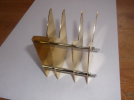
A wheel quartering jig was then fabricated using some brass sheet and long M3 screws and spacers. The design of this is not critical as long as the roughly 90 degree vee is exactly the same on all four brass pieces and the best way to achieve this is to clamp them together and cut and drill them together.
The rear driving wheels were then assembled onto the chassis with the MSC models motor/gearbox. I used a two part rapid epoxy to glue the wheels onto the axles, ensuring the back to back was correct for the wheels used and that no epoxy got onto the axle bushes (if used – not essential but recommended).
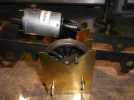
This action was then repeated for the other axles, making sure the quartering was the same on all the driving axles.

Once everything was cured, the coupling rods were fitted onto the crank pins using some brass tube and brass washers as bushes and the chassis was checked for smooth running with no binding and adjusted by a little enlarging of the coupling rod holes if necessary until it ran smoothly. The final drive gear was then tightened on the drive axle and a test run of the motor at 12 volts was carried out.
The gear screw was then loosened again ant the chassis test run on the track to make sure it would negotiate the curves. This loco is good down to 2 metre radius which is not bad for all 4 rigid axles.
FOOTPLATE AND BODY
The footplate was then carefully marked out on 22thou nickel silver sheet, with openings to clear all the wheels and coupling rods. It was rough cut out on my bandsaw and then filed to shape.

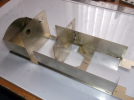
You can see in the picture that I cut through the centre section so that the rear end could be also cut with the bandsaw.
The drawing was then printed on to self adhesive A4 labels, the individual bodywork pieces cut out and stuck onto 22 thou nickel silver sheet and cut out with the bandsaw, filing to finished size.


Once cut to size these were carefully tack soldered on to the footplate on a sheet of plate glass, clamping the right angles with some aluminium angle (I used a short length of 2” x 2” x ¼”). The angles were carefully checked and adjusted afterwards with a set square.


Tack soldering allows for dismantling if you mess it up!
The frames were then rough cut to size using my cheap LIDL bandsaw which is very easy and safe to use, you have to be very determined to cut off a finger!
The plywood backing was then removed and the frames held between some long aluminium angle jaws in the vice and filed to the final shape.
Once filed to shape, the frames were separated and the paper labels removed with label remover spray if necessary.
Because I used Slaters axle bushes, the axle holes were opened up, a half millimetre at a time, to 8mm and a taper reamer was then used to open them up until the bushes were a tight fit. The centre axle hole and the trailing axle hole were carefully filed a little to allow a little vertical movement.
A trial assembly of the frames, some 35mm x 3mm threaded spacers, bushes, axles, wheels, coupling rods and coupling rod bushes was made to make sure everything fitted and ran smoothly. I did not Loctite the wheels at this stage.
After dismantling the frames, the chassis sides were washed in hot water and some very cheap washing up liquid, the type with no lanolin, degreased with some Birchwood-Casey Cleaner-degreaser and then chemically blackened using some Birchwood-Casey Brass Black, following the instructions for use carefully. After thoroughly washing the frames, they were re assembled with the spacers again using m3 x 5mm flat wafer headed laptop screws obtained from Ebay and squared up on a sheet of plate glass obtained from an old scanner/printer. A 3mm hole was drilled in the rear spacer to allow a fixing screw into the base of the bunker.
A wheel quartering jig was then fabricated using some brass sheet and long M3 screws and spacers. The design of this is not critical as long as the roughly 90 degree vee is exactly the same on all four brass pieces and the best way to achieve this is to clamp them together and cut and drill them together.
The rear driving wheels were then assembled onto the chassis with the MSC models motor/gearbox. I used a two part rapid epoxy to glue the wheels onto the axles, ensuring the back to back was correct for the wheels used and that no epoxy got onto the axle bushes (if used – not essential but recommended).
This action was then repeated for the other axles, making sure the quartering was the same on all the driving axles.
Once everything was cured, the coupling rods were fitted onto the crank pins using some brass tube and brass washers as bushes and the chassis was checked for smooth running with no binding and adjusted by a little enlarging of the coupling rod holes if necessary until it ran smoothly. The final drive gear was then tightened on the drive axle and a test run of the motor at 12 volts was carried out.
The gear screw was then loosened again ant the chassis test run on the track to make sure it would negotiate the curves. This loco is good down to 2 metre radius which is not bad for all 4 rigid axles.
FOOTPLATE AND BODY
The footplate was then carefully marked out on 22thou nickel silver sheet, with openings to clear all the wheels and coupling rods. It was rough cut out on my bandsaw and then filed to shape.
You can see in the picture that I cut through the centre section so that the rear end could be also cut with the bandsaw.
The drawing was then printed on to self adhesive A4 labels, the individual bodywork pieces cut out and stuck onto 22 thou nickel silver sheet and cut out with the bandsaw, filing to finished size.
Once cut to size these were carefully tack soldered on to the footplate on a sheet of plate glass, clamping the right angles with some aluminium angle (I used a short length of 2” x 2” x ¼”). The angles were carefully checked and adjusted afterwards with a set square.
Tack soldering allows for dismantling if you mess it up!
Jim Smith
Member
Buffer beams were then made by measuring off the drawing and cutting out 4 pieces of 0.5mm brass sheet for front and rear, together with 2 pieces of 1/8” plywood to be sandwiched between the brass.
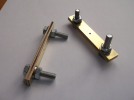
They were carefully drilled for buffers and couplings with a 2mm drill for a start. The buffer holes were opened up to the correct size 0.5mm at a time whilst the sandwich was clamped together. Holes were then deburred and the sandwich was bolted together using 6mm bolts in this case, the outer shape filed to size and the coupling hole filed out with needle files ( a very slow , tedious job).
They were then carefully marked so that they could be reassembled correctly later and dismantled. The inner brass buffer beams were then soldered to the ends of the footplate, making sure they were at right angles to it.

Once the buffer beams were in place the side valances were added, using 2.5mm solid square section brass bar to give the footplate a bit of rigidity.

The body so far was then sat on the chassis to check that all the clearances were still there. Adjustments were made whilst it was still relatively easy to get at things. The position of the rear fixing screw into the base of the bunker was marked and drilled. An M3 brass nut was soldered on the inside of the hole whilst being held in place by a stainless screw.

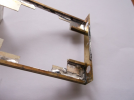
Two short pieces of 2.5mm square section brass were soldered to the underside of the front footplate and a length of 2 x 1mm brass strip was soldered to the underside of the buffer beam to hold the front of the footplate in place and an M3 screw fitted through the rear spacer into the bunker floor. The footplate was then checked for a tight fit fo the frames.

BOILER
The boiler was marked out on some 15thou nickel silver sheet using the formula; circumference = 3.142 x diameter and subtracting 1.5mm in my case. The smokebox wrappers – 2 were used to get the boiler smokebox junction step – were marked out in the same fashion and all were cut to size ready for rolling.
Boiler ends were cut out of 1mm thick brass sheet using a fly cutter (RS 549-729) in a pillar drill (do NOT use in a hand drill) set to cut outside by reversing the tool. The centre boiler wall with a large hole was cut by first screwing the brass sheet down on to a piece of ½” plywood and cutting the centre hole, then reversing the cutting tool and cutting the outer diameter using the hole in the plywood as a guide.


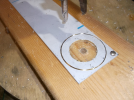

The boiler was then rolled around a piece of steel tube around 30mm dia so that it sprung back to the correct size (fingers crossed!). The ends were started by clamping the tube against a piece of aluminium angle in the vice, pushing the end of the boiler sheet into the vee so formed and bending it round the tube at the same time, keeping up the downward pressure. This maintains the curvature right to the end.
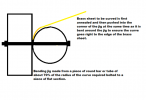
The jig is shown bolted together but clamping it in the vice is just as good.
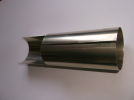
The boiler was then cut away carefully with a saw to allow for the motor. It was best to do this after rolling.
They were carefully drilled for buffers and couplings with a 2mm drill for a start. The buffer holes were opened up to the correct size 0.5mm at a time whilst the sandwich was clamped together. Holes were then deburred and the sandwich was bolted together using 6mm bolts in this case, the outer shape filed to size and the coupling hole filed out with needle files ( a very slow , tedious job).
They were then carefully marked so that they could be reassembled correctly later and dismantled. The inner brass buffer beams were then soldered to the ends of the footplate, making sure they were at right angles to it.
Once the buffer beams were in place the side valances were added, using 2.5mm solid square section brass bar to give the footplate a bit of rigidity.
The body so far was then sat on the chassis to check that all the clearances were still there. Adjustments were made whilst it was still relatively easy to get at things. The position of the rear fixing screw into the base of the bunker was marked and drilled. An M3 brass nut was soldered on the inside of the hole whilst being held in place by a stainless screw.
Two short pieces of 2.5mm square section brass were soldered to the underside of the front footplate and a length of 2 x 1mm brass strip was soldered to the underside of the buffer beam to hold the front of the footplate in place and an M3 screw fitted through the rear spacer into the bunker floor. The footplate was then checked for a tight fit fo the frames.
BOILER
The boiler was marked out on some 15thou nickel silver sheet using the formula; circumference = 3.142 x diameter and subtracting 1.5mm in my case. The smokebox wrappers – 2 were used to get the boiler smokebox junction step – were marked out in the same fashion and all were cut to size ready for rolling.
Boiler ends were cut out of 1mm thick brass sheet using a fly cutter (RS 549-729) in a pillar drill (do NOT use in a hand drill) set to cut outside by reversing the tool. The centre boiler wall with a large hole was cut by first screwing the brass sheet down on to a piece of ½” plywood and cutting the centre hole, then reversing the cutting tool and cutting the outer diameter using the hole in the plywood as a guide.
The boiler was then rolled around a piece of steel tube around 30mm dia so that it sprung back to the correct size (fingers crossed!). The ends were started by clamping the tube against a piece of aluminium angle in the vice, pushing the end of the boiler sheet into the vee so formed and bending it round the tube at the same time, keeping up the downward pressure. This maintains the curvature right to the end.
The jig is shown bolted together but clamping it in the vice is just as good.
The boiler was then cut away carefully with a saw to allow for the motor. It was best to do this after rolling.
Jim Smith
Member
The boiler was then cut away carefully with a saw to allow for the motor. It was best to do this after rolling.

The boiler was then clamped round the front end using a jubilee clip until it was a snug fit all round and then it was soldered all round inside the boiler. This was a bit tricky because I was working blind, by feel alone.

Two lead ingots from Ebay (lynpar3) were then inserted into the boiler and the centre ring was inserted, clamped with the jubilee clip and soldered.


The boiler was now very heavy for good track adhesion.
The first medium length smokebox wrapper was then soldered round the boiler, flush to the front.

The paper label for the smokebox front was stuck on to some 22 thou nickel silver sheet and cut to size to fit the front of the boiler and to fit between the frames with steps to give the correct height, The rivet detail was then marked out and embossed and a small hole was drilled in the centre. Handrail holes could also be drilled at this stage – I forgot! It was then very carefully soldered to the front of the boiler making sure the boiler seam was at the bottom. Excess solder was then cleaned off
The second smokebox wrapper was then marked out and the river detail was embossed using photographs as reference. It was then carefully bent to fit the smokebox front and soldered round the boiler after being clamped in place – I used lots of rubber bands.

The picture shows a trial fit of the boiler supported on wood blocks at the back and I couldn’t resist trying it with the chimney and dome! At this stage tank tops were cut to size and soldered in.
The rear boiler end was then soldered to the back end of the boiler. A hole was drilled in the cab front to take a bolt fitted with a spacer to fit into the centre hole in the back of the boiler. The boiler could then be slid into place for fitting. It was not yet soldered in.
The outer buffer beams were then marked out and the rivets embossed.
The buffer beams were then fitted in place and glued together whilst being held in place with the 6mm bolts and small bolts through the coupling holes.


Once the glue had cured, the buffer housings were soldered in place.
The cab floor was then cut to size and soldered in together with the inside parts of the tanks/wheel covers. The tank balance pipe covers between front tanks and bunker were cut to size, folded and soldered in.


This had the effect of stiffening up the whole structure.
U section brass channel 1mm x 1mm was bent to shape and fitted to the inner edges of the tank fronts to fit snugly to the boiler so that the boiler could be soldered to them when fitted. A length of 2mm x 1mm brass unequal angle was formed to fit round the back end of the boiler and be snug against the cab front and soldered to the boiler.
The boiler was then fitted in place and soldered to the body at the front of the cab, the fronts of the tanks and the smolebox frontplate to the footplate.
This made the whole assembly nice and rigid.
Cylinder front castings from walsall models were screwed and glued to the smokebox front and some Valve chest covers were cut to size, embossed for rivets and glued on using epoxy.

SPLASHERS
The splashers were made by the adhesive label method and cut to size from 22 thou nickel silver sheet. The tops and front were cut from nickel silver.

The main side and splasher side were laminated together, the curved top was soldered to it and the sandbox top and front were soldered in with a short strip soldered into the gap.

The coupling rod splasher was then built up and soldered on to the main splasher


It can be seen that I used some brass strip for the coupling rod splasher top.
The complete splashers were then tack soldered onto the footplate and checked for position before fully soldering.
The boiler was then clamped round the front end using a jubilee clip until it was a snug fit all round and then it was soldered all round inside the boiler. This was a bit tricky because I was working blind, by feel alone.
Two lead ingots from Ebay (lynpar3) were then inserted into the boiler and the centre ring was inserted, clamped with the jubilee clip and soldered.
The boiler was now very heavy for good track adhesion.
The first medium length smokebox wrapper was then soldered round the boiler, flush to the front.
The paper label for the smokebox front was stuck on to some 22 thou nickel silver sheet and cut to size to fit the front of the boiler and to fit between the frames with steps to give the correct height, The rivet detail was then marked out and embossed and a small hole was drilled in the centre. Handrail holes could also be drilled at this stage – I forgot! It was then very carefully soldered to the front of the boiler making sure the boiler seam was at the bottom. Excess solder was then cleaned off
The second smokebox wrapper was then marked out and the river detail was embossed using photographs as reference. It was then carefully bent to fit the smokebox front and soldered round the boiler after being clamped in place – I used lots of rubber bands.
The picture shows a trial fit of the boiler supported on wood blocks at the back and I couldn’t resist trying it with the chimney and dome! At this stage tank tops were cut to size and soldered in.
The rear boiler end was then soldered to the back end of the boiler. A hole was drilled in the cab front to take a bolt fitted with a spacer to fit into the centre hole in the back of the boiler. The boiler could then be slid into place for fitting. It was not yet soldered in.
The outer buffer beams were then marked out and the rivets embossed.
The buffer beams were then fitted in place and glued together whilst being held in place with the 6mm bolts and small bolts through the coupling holes.
Once the glue had cured, the buffer housings were soldered in place.
The cab floor was then cut to size and soldered in together with the inside parts of the tanks/wheel covers. The tank balance pipe covers between front tanks and bunker were cut to size, folded and soldered in.
This had the effect of stiffening up the whole structure.
U section brass channel 1mm x 1mm was bent to shape and fitted to the inner edges of the tank fronts to fit snugly to the boiler so that the boiler could be soldered to them when fitted. A length of 2mm x 1mm brass unequal angle was formed to fit round the back end of the boiler and be snug against the cab front and soldered to the boiler.
The boiler was then fitted in place and soldered to the body at the front of the cab, the fronts of the tanks and the smolebox frontplate to the footplate.
This made the whole assembly nice and rigid.
Cylinder front castings from walsall models were screwed and glued to the smokebox front and some Valve chest covers were cut to size, embossed for rivets and glued on using epoxy.
SPLASHERS
The splashers were made by the adhesive label method and cut to size from 22 thou nickel silver sheet. The tops and front were cut from nickel silver.
The main side and splasher side were laminated together, the curved top was soldered to it and the sandbox top and front were soldered in with a short strip soldered into the gap.
The coupling rod splasher was then built up and soldered on to the main splasher
It can be seen that I used some brass strip for the coupling rod splasher top.
The complete splashers were then tack soldered onto the footplate and checked for position before fully soldering.
Jim Smith
Member
The complete splashers were then tack soldered onto the footplate and checked for position before fully soldering.

Boiler bands were applied using some Model Technics TrimLine which I have been using for a long time now and when applied to clean metal and with the ends secured with a blob of epoxy, proves to be very rugged in use.
CHIMNEY
I bought a chimney, dome and safety valve meant for a “Coal Tank” from Wallsall models and it turned out that although the dome and safety valve were the correct size, the chimney was too tall. I set about reducing the chimney height. The first thing I did was to find a suitable large bolt and nut to fit right through the centre of the chimney and packed out the larger end of the bore with PVC tape until it was central in the bore. The top end of the bolt was gripped in my pillar drill chuck and final adjustments were made to ensure it ran fairly true. The chimney was then marked for the correct length whilst the drill was running. It was then removed from my rough mandrel and carefully sawn off, a little at a time , with a piercing saw.
It was fitted back on the mandrel and checked for running true. The step to fit in the chimney base was then very carefully cut using a nice thick machine hacksaw blade and, by a combination of this and opening out the hole in the base, was made to be a tight fit in the base.

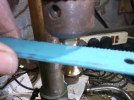
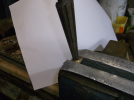

The chimney was then soldered to the base internally.
BOILER FITTINGS
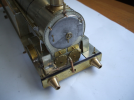
Chimney, dome and safety valve were cleaned up and sanded to the correct profile using emery cloth or sandpaper wrapped around a piece of tube of the correct diameter and rubbing the item along it until they were a nice clean fit to the boiler and smokebox. The firebox door from Wallsall models was sanded flat to be a good fit on the smokebox front. These were all carefully glued in place with epoxy, double checking for position as the glue cured.

The smokebox front handrail was added, using 1mm stainless steel wire. The smokebox dart was fitted and epoxied in place. The boiler was drilled and the external pipework fitted most of the castings and fittings came from Wallsall models but some, including the “O” gauge carriage door handle on the smokebox door, came from my junk box. For some of the pipe flanges, I used 12 and 14BA washers.
Vacuum pipes came from Slaters Plastikard part no. 8210 and the front one was bent to shape and soldered on, the rear one cut to length and soldered on.
Lamp irons came from Slaters Plastikard and are not listed – you have to talk to David and ask for 4 lost wax sprues for the Kirtley gauge 1 kit. These are fitted into drilled holes and soldered or glued. The boiler top lamp iron was very carefully soldered in place.

CAB DETAILING
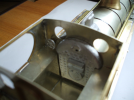
The internal cab detailing I left to a basic minimum , just fitting a backhead , reversing wheel and brake wheel from Walsall models (as used on the coal tank). The backhead was fitted in place with an 8BA nut and bolt and the wheels were simply epoxied on.

BUNKER AND ELECTRICS
Brass angle was soldered to the sides of the bunker and a piece of 1mm brass sheet was cut to drop in on top of the angles. The floor of the bunker was covered with a raised up piece of brass sheet to prevent the battery from rubbing on the wheels.
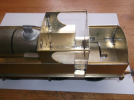
The toolboxes and a vent made from some brass tube and sheet were epoxied in place on the bunker cover – these gave something to grip to lift it out to switch on or charge the battery.

The battery was a 12 volt 1800mAh Li-ion rechargeable bought from litpower on Ebay. This I carefully stripped and cut down to a pack with just the battery in it to keep the size down (I do not recommend this to anyone without electronic knowledge as these batteries can explode if you make a mistake!)
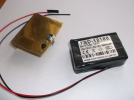
A brass plate was made to fit the battery and also hold a charging socket and switch. The battery was taped to the plate and wired to the switch, socket and motor via a plug and socket in the wiring to the motor.

A radio control was used from Micron Radio Control, which can be seen with a protective heat shrink sleeve which is applied after soldering the connections.
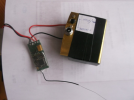
Boiler bands were applied using some Model Technics TrimLine which I have been using for a long time now and when applied to clean metal and with the ends secured with a blob of epoxy, proves to be very rugged in use.
CHIMNEY
I bought a chimney, dome and safety valve meant for a “Coal Tank” from Wallsall models and it turned out that although the dome and safety valve were the correct size, the chimney was too tall. I set about reducing the chimney height. The first thing I did was to find a suitable large bolt and nut to fit right through the centre of the chimney and packed out the larger end of the bore with PVC tape until it was central in the bore. The top end of the bolt was gripped in my pillar drill chuck and final adjustments were made to ensure it ran fairly true. The chimney was then marked for the correct length whilst the drill was running. It was then removed from my rough mandrel and carefully sawn off, a little at a time , with a piercing saw.
It was fitted back on the mandrel and checked for running true. The step to fit in the chimney base was then very carefully cut using a nice thick machine hacksaw blade and, by a combination of this and opening out the hole in the base, was made to be a tight fit in the base.
The chimney was then soldered to the base internally.
BOILER FITTINGS
Chimney, dome and safety valve were cleaned up and sanded to the correct profile using emery cloth or sandpaper wrapped around a piece of tube of the correct diameter and rubbing the item along it until they were a nice clean fit to the boiler and smokebox. The firebox door from Wallsall models was sanded flat to be a good fit on the smokebox front. These were all carefully glued in place with epoxy, double checking for position as the glue cured.
The smokebox front handrail was added, using 1mm stainless steel wire. The smokebox dart was fitted and epoxied in place. The boiler was drilled and the external pipework fitted most of the castings and fittings came from Wallsall models but some, including the “O” gauge carriage door handle on the smokebox door, came from my junk box. For some of the pipe flanges, I used 12 and 14BA washers.
Vacuum pipes came from Slaters Plastikard part no. 8210 and the front one was bent to shape and soldered on, the rear one cut to length and soldered on.
Lamp irons came from Slaters Plastikard and are not listed – you have to talk to David and ask for 4 lost wax sprues for the Kirtley gauge 1 kit. These are fitted into drilled holes and soldered or glued. The boiler top lamp iron was very carefully soldered in place.
CAB DETAILING
The internal cab detailing I left to a basic minimum , just fitting a backhead , reversing wheel and brake wheel from Walsall models (as used on the coal tank). The backhead was fitted in place with an 8BA nut and bolt and the wheels were simply epoxied on.
BUNKER AND ELECTRICS
Brass angle was soldered to the sides of the bunker and a piece of 1mm brass sheet was cut to drop in on top of the angles. The floor of the bunker was covered with a raised up piece of brass sheet to prevent the battery from rubbing on the wheels.
The toolboxes and a vent made from some brass tube and sheet were epoxied in place on the bunker cover – these gave something to grip to lift it out to switch on or charge the battery.
The battery was a 12 volt 1800mAh Li-ion rechargeable bought from litpower on Ebay. This I carefully stripped and cut down to a pack with just the battery in it to keep the size down (I do not recommend this to anyone without electronic knowledge as these batteries can explode if you make a mistake!)
A brass plate was made to fit the battery and also hold a charging socket and switch. The battery was taped to the plate and wired to the switch, socket and motor via a plug and socket in the wiring to the motor.
A radio control was used from Micron Radio Control, which can be seen with a protective heat shrink sleeve which is applied after soldering the connections.
Attachments

Jim Smith
Member
A radio control was used from Micron Radio Control, which can be seen with a protective heat shrink sleeve which is applied after soldering the connections.

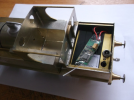
CAB ROOF
Cab side edging and roof supports were soldered on, consisting of brass U section 1mm x 1mm, The roof was cut out of 22 thou nickel silver sheet and formed by hand to fit. Roof locating bars were fitted inside the roof and were 3mm square brass bar soldered on.
The whistle came from Walsall Model industries and was fitted through a glued on and riveted plate and soldered underneath.


PAINTING
I very thoroughly washed all the body parts in hot water and left to dry overnight. I then sprayed on lots of very light mist coats (to avoid runs) of Simoniz acrylic grey primer, leaving 15 minutes between coats. Once I was happy that the coverage was complete, I then sprayed on a lot of thin coats of Simoniz satin black spray, again leaving 15 minutes between coats. The whole process took me a day and a half after which I left it overnight in a warm room to fully harden.
Buffer beams were then painted red using well stirred Tamiya XF-7 Flat Red Acrylic paint, using several coats to achieve full coverage.
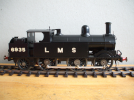
Transfers from Fox Transfers were applied following their instructions and once fitted, left to dry for 24 hours and sprayed over with several coats of acrylic satin varnish.
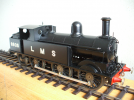

CAB ROOF
Cab side edging and roof supports were soldered on, consisting of brass U section 1mm x 1mm, The roof was cut out of 22 thou nickel silver sheet and formed by hand to fit. Roof locating bars were fitted inside the roof and were 3mm square brass bar soldered on.
The whistle came from Walsall Model industries and was fitted through a glued on and riveted plate and soldered underneath.
PAINTING
I very thoroughly washed all the body parts in hot water and left to dry overnight. I then sprayed on lots of very light mist coats (to avoid runs) of Simoniz acrylic grey primer, leaving 15 minutes between coats. Once I was happy that the coverage was complete, I then sprayed on a lot of thin coats of Simoniz satin black spray, again leaving 15 minutes between coats. The whole process took me a day and a half after which I left it overnight in a warm room to fully harden.
Buffer beams were then painted red using well stirred Tamiya XF-7 Flat Red Acrylic paint, using several coats to achieve full coverage.
Transfers from Fox Transfers were applied following their instructions and once fitted, left to dry for 24 hours and sprayed over with several coats of acrylic satin varnish.


john lewsey
Western Thunderer
Jim.....it looks superb.

David Halfpenny
Western Thunderer
Thank you for putting these great articles in RM, JimFull construction articles currently running in Railway Modeller and the G1MRA Gazette and maybe here if I can figure out how to post it!

Jim Smith
Member
Thanks John - I think some photos are missing!Jim.....it looks superb.
Jim Smith
Member
Thanks David!Thank you for putting these great articles in RM, Jim
Jim Smith
Member
When i first added this article , the photos seemed to load OK but when I look again this afternoon, half of them have vanished! I am not going to do all that again! took me hours! I wish I could just upload the original Microsoft Word Document file complete with pictures because I have already done the hard work in Office.
Jim Smith
Member
Just tried various ways to upload the Word file but get the message that the file is too large for the server and it's only 9.98MB so just about email able so if anyone wants the original article I can always email it to them!
The Watford tank article is in Railway Modeller April, May and June 2024 - also in the G1MRA Journal Dec 2023, March 2024 and in the upcoming issue.
The Watford tank article is in Railway Modeller April, May and June 2024 - also in the G1MRA Journal Dec 2023, March 2024 and in the upcoming issue.
Jim Smith
Member
Here goes with the article in PDF format - let me know if it works!Full construction articles currently running in Railway Modeller and the G1MRA Gazette and maybe here if I can figure out how to post it!
