Mr Grumpy

mickoo

Western Thunderer
I think we might need to set up another thread if this continues - we're mighty close to hi-jacking this one.

However Mick, and I have absolutely no knowledge at first hand, nor any historic interest, so my comments are based only on what I see, and that is the roof of the 56 in a lighter grey than exhaust fumes and oil would be and also an amazingly well defined demarcation between the bodyside blue and the roof grey. The roof is also reflective over the cab suggesting that this has been cleaned to a gloss finish. In the same series of photos I have some of a couple of Class 25s, also at the S & D 150 shindig. One of them certainly appears to have a blue roof with a very approximate and soft demarcation between the blue and exhaust/dirt and I'd have thought this to be consistent with automatic cleaning. Also nearly all the locos and vehicles were specially "bulled up" for the occasion with cleaned roofs - in fact the loco with the dirty roof was the exception, and the other shows clear evidence of exhaust staining around certain roof apertures.

All in all I bow to your certain knowledge but wonder whether there might be exceptions. In the case of 56036 above the demarcation body to roof matches that on "my" 56.

Brian
Brian,

The wash plants only do vertical sides, anything not in that plane does not get washed, the brushes have a certain length so part of the cant rail will get washed but overall they will give a reasonably straight edge between washed and dirty. Having said all that I do dimly recall seeing some wassh plants with roof brushes but cannot be certain.

FWIW the roof actually looks dirty blue to me on my monitor and my first reaction was, wheres the grey your on about LOL, the cab roof is gloss and is clearly blue (to me), the crown has a matt finish and is slightly dirtier. Check the APT behind it clearly has a dirty streak down the very top of the roof.

All in all it doesn't really matter LOL
 

Bob Reid

Western Thunderer
Don't forget Mick - All of the original 12 E&G 47/7's received off white / grey roofs courtesy of Haymarket from around August 1979 47701-47710 came off conversion at Crewe in "Standard" BR Blue but were given white roofs by the depot - the only two other originals 47711 & 47712 arrived with white roofs to match their unique (for the 47/7s) Large Logo livery. The large logo livery was the last true non-sector livery from the BR Blue era surely being several years before the start of the break up of the regions.
 

Mr Grumpy

Western Thunderer
Stopper, what do you call stopper?

That's the beauty of working in metal, dunk it, clean it and your back to a good solid foundation, not as easy with plastic or resin.

'Stopper' or knifing putty is used to fill fine scratches, usually following a body work repair to a car, prior to painting.
I started using it in the 70's when be decking Ford Escorts with bubble arches Wolfrace wheels and outrageous spoilers.
Problem was, I was too interested in other teenage shinanigans and missed a hell of a lot of the railway scene:-(

http://www.halfords.com/motoring/pa...-preparation/holts-cataloy-knifing-putty-100g
 

mickoo

Western Thunderer
'Stopper' or knifing putty is used to fill fine scratches, usually following a body work repair to a car, prior to painting.
I started using it in the 70's when be decking Ford Escorts with bubble arches Wolfrace wheels and outrageous spoilers.
Problem was, I was too interested in other teenage shinanigans and missed a hell of a lot of the railway scene:-(

http://www.halfords.com/motoring/pa...-preparation/holts-cataloy-knifing-putty-100g
Thought it might be:thumbs:, that knifing putty has a solvent in it I think, used to melt thin Plasticard if you smeared it on too thickly. I also used to thin it with solvent glue to feather the edges or level it a bit better and make sure it got into all the nooks and bonded to the Plasticard better.
 

Jordan or Plymouth Mad

Mid-Western Thunderer
To me 'Large Logo' or "Largo" as we called it was definitely part of the BR Blue scene, albeit the 'last' part circa 1980 to '85. It suited most locos it was applied to very well (*thinks* Hoovers & Scotrail Syphons*# especially) & certainly livened up the "all blue" late-70's monotony, just before the livery madness started, beginning with Railfreight red/grey on the 58s, which I believe were the first BR locos to never wear BR Blue?

* classes 50 & 37 ;)
# my mates & I always refered to 37s as 'Syphons', never 'Tractors'. No idea why, & never seen them called Syphons anywhere else, either!! :confused:

Sorry, another thread hijack over. :oops:
 
Last edited:

Mr Grumpy

Western Thunderer
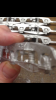
The major bodywork painting is complete at last :thumbs:
Just the handrails to clean off, and a little retouching of the cab interior. Then I will fit the fans.
The paintwork really does look great, although next time I will spray with my air brush rather than aerosol. Even with a loco this big, too much paint and too little control is the drawback.
Weathering will be quite light I think, again applied by airbrush.
On with the bogie frames......
image.jpeg

image.jpeg
image.jpeg
 

warren haywood

Western Thunderer
Just catching up with this, when I remove masking from cellulose paint it must be done immediately whilst paint is still wet or after a couple of hours which may leave a bit of a rough edge
Caused by the way cellulose bonds to itself. I could go into it further but too much sangria :):)
 

Mr Grumpy

Western Thunderer
....so moving on to the bogie frames.
I have had a really good look through my available reference material and the net, trying to discover if the axle boxes were painted yellow and the springs painted when the 47's were repainted from green to blue, but still pre TOPs?
My Heljan IKB sported yellow axle boxes but I don't know if this was correct for the period (late 60's- early 70's)
Anyone with a photo of this embellishment around this era?
Thanks.... and also many sincere thanks for all the info along the way, I very much appreciate it! :)
 

Mr Grumpy

Western Thunderer
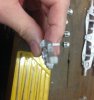
The bogie frames are really nice castings. I have soldered the inner springs on to the top two frames, and it gives them great 3D 'depth' ( not sure if that's the correct description but you get my drift!)
I'm hoping to drill out the holes on the lifting eyes but don't have a drill long enough, and don't want to damage the frames with a rotating pin vice. (Sorry it's a little blurred, must start using my camera rather than the phone)
Perhaps this is where experience of kit building kicks in!!:(
image.jpeg

image.png
 

Mr Grumpy

Western Thunderer
Thanks Andrew,
I'm just carrying out a little pipe strangling on the bogie frames at the moment, I used to do it for a living but find it quite a trial in 7mm !!
 
Top