Just after midnight on 4th April 1912, the White Star Line's newest vessel, the RMS Titanic, arrived in Southampton to prepare for it's maiden voyage to New York on 10th April.
When she left Belfast on 2nd April, she carried 1880 tons of coal, but would require considerably more to make the voyage.
At the same time, between 28th February and 6th April 1912, the UK was undergoing its first national coal strike which had resulted in several other transatlantic crossings being postponed, and vessels laid up. As such, a good portion of coal was transferred from other White Star vessels, such as Adriatic and Oceanic, but Titanic would go on to take 4427 tons on 5th April, giving a total of 5892 tons when it departed on 10th April (allowing for that burnt on the voyage from Belfast and whilst stationary in port).
The White Star Line sourced it's coal from Lewis Merthyr Consolidated Collieries Ltd in the Rhondda Valley, Wales, and Titanic was no different, with the rest of the coal coming from here. As such, coal would have been supplied to Southampton in the collieries own wagons.
Research has shown these to be a mix of six and seven plank end door opens with internal strapping, matching designs by Gloucester. In particular, one very clear photo from 1909 shows a 15' seven plank example.

(Source:
Lewis Merthyr Colliery, photograph - Collections Online | Museum Wales ).
Having had a fascination with Titanic for almost as long as I have railways, it seemed like an appropriate crossover to model such a wagon, with now, in the month of April and having just returned from a trip to Belfast to visit the Titanic Museum, seeming like an equally appropriate time to start this build.
I have been planning this one for a little while, and when I first started researching this I sought to identify if such a wagon was available.
That was when I discovered Meow Valley Models, who produce a range 3D printed wagon kits, with an apparent focus on Gloucester and Charles Roberts types.
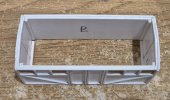
So with that, here is their kit for a Gloucester 15' seven plank open:
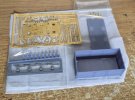


These have been designed with Brassmaster chassis kits in mind, of which I have also acquired the appropriate etch.
First impressions are positive. The print is very crisp and detailed, and I look forward to building it.
- James